|
The process of mourning begins with the essential and often painful step of acknowledging the reality of the death. This step requires mourners to gently confront the reality of their loss, which can take weeks, months, or even years. During this time, it is not uncommon for mourners to remind themselves repeatedly that their loved one has died. Accepting the permanence of this loss is crucial for healing, though it may be one of the most challenging aspects of the mourning process. Confronting the truth, despite the pain it brings, lays the foundation for moving forward.
Feeling the pain of the loss is another crucial aspect of the grieving process. Bereavement literally means to be torn apart, and embracing the pain that comes with loss is essential to healing. One of the greatest challenges for those accompanying mourners in their grief is to be present to the pain without trying to fix it. Allowing oneself to fully experience the depth of this pain, rather than avoiding or suppressing it, is a critical step towards eventual healing. Remembering the person who has died is a vital part of the mourning journey. This involves exploring the relationship that existed with the deceased and working to remember them in their entirety, including both positive and negative aspects. By converting the relationship from one of presence to one of memory, mourners can honor the person who has died and keep their memory alive in a meaningful way. This process helps to integrate the loss into the mourner’s life and find a new way to maintain a connection with their loved one. As the mourner adapts to life without their loved one, developing a new self-identity becomes necessary. The loss of a relationship often means adjusting to new roles and responsibilities in life. This readjustment allows the mourner to create a new sense of wholeness, filling in the gaps left by the deceased. This can be one of the most draining tasks of mourning, as it requires significant emotional and psychological effort to redefine oneself and one’s place in the world. Searching for meaning in the aftermath of loss is a deeply personal and often spiritual journey. This process often involves an exploration of faith and values, as mourners reevaluate their meaning in life and reasons for continuing to live. It is essential for those supporting mourners to resist the temptation to provide answers to these profound questions. Allowing the mourner to find their own meaning and understanding is a vital part of the healing process, fostering a sense of personal growth and resilience. Finally, receiving ongoing support from others is crucial for mourners as they navigate their grief. The need for support can last for months or even years, as grief does not follow a set timeline. Even when mourners appear to have adjusted to their loss externally, they may still be processing a great deal internally. After the acute pain of loss subsides, grief often manifests in "bursts," making it essential for mourners to have a network of support that they can rely on over the long term. This continued support helps them to cope with their grief and move towards healing. Our team of sensitive and skilled therapists can help navigate all of these needs! Wolfelt, A.D. (2016) Counseling Skills for Companioning the Mourner. Ft. Collins, CO: Companion Press.
0 Comments
Losing loved ones is an inevitable part of living as a human. The times surrounding a loved one’s death can be the most challenging seasons in our lives. Even though loss is a universal human experience, people who are grieving often feel alone and isolated because it seems like no one understands what they are going through. Having a supportive community can provide comfort, solace and opportunities for healing. Finding a grief-oriented community can maximize healing opportunities. Grieving and healing in community is an ancient practice.Grieving and healing in community is an ancient practice. Before the rise of individual achievement focused societal structures, there were community gathering places and multigenerational homes where people knew how to hold other’s grief. Grief begins healing when it is externalized. We call this expression of grief mourning. We also know that healing happens when our suffering is witnessed and received by a compassionate party. Perhaps more than any other condition, a community of compassionate and understanding witnesses can unlock the power of healing for those who are grieving. We believe that healing in community happens by both hearing and being heard.We believe that community offers opportunities to heal by both hearing and being heard. When we resonate with the stories others are telling, we learn that we are not alone. Sometimes community members verbalize a part of our own experience we haven’t been able to speak about yet. When we are able to see ourselves in another’s story, we are bolstered by the togetherness we find in our common experiences. We also heal when we are able to share our own story in the safety of a group who will hold our experiences with tender compassion. We believe in the power of story-telling; that when we speak of our internal experiences, we are empowered to metabolize and release the pain. And when our sharing is witnessed in a caring and understanding way, we are more able to accept our painful circumstances. When the bereaved are able to give and receive in these ways, the strength of the group can carry all forward in healing. We invite all those who are navigating the grief related to the loss of a loved one to join our next Understanding Your Grief Support Group. More information can be found HERE. 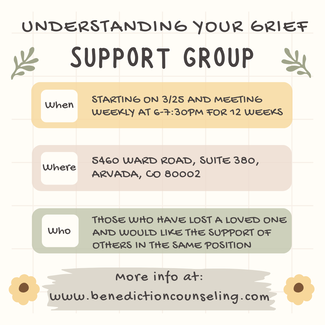 Have you lost a loved one and find yourself in a never-ending sea of grief? The process of mourning typically takes much longer than we anticipate. As a grief therapist, I know that grief can take a long time, often extending years after a significant loss. There is no protocol for how long grieving is meant to take. In fact, the grief process is wholly informed by the relationship itself. However, there may be some reasons that we may extend the grieving. If this is your experience, you may be encouraged to know that moving through grief emotions and adjustments may help you remember more from your time with your person.
1. We hang on to grief as a way to stay close to our person Grief and mourning are an intense and all-consuming experience. When we are processing and feeling and adjusting on such an intense scale, our brain is much less available for it’s normal functions. It is common to feel brain fog while grieving. The griever may be tempted to stay in this phase of grief because it centers the person that they lost. The focus is on the relationship and the stories are about the person. The pain seems to point back to their person. The logic here is that staying in the pain of grief must be the only way to stay connected to the person who is now gone. There is a time for all grievers when the pain eases, the emotions have softened and the adjustments are starting to feel normal. It is important to acknowledge when the grief seems to be letting up. And the good news here is that when the griever is out of “survival mode,” they are able to access many more memories and stories from their time with their person. There is a sense of gaining more of them back as the grief softens. 2. We hang on to grief because we don’t know what comes next Another common experience for those grieving a significant loss is a fear and confusion about the future. Moving forward in life without your person seems impossible for so many reasons. As uncomfortable as the grief experience can be, it does become familiar terrain after a while. For some, the temptation is to stay in the grief because it is familiar instead of navigating the uncertainty of the future. Considering a new future is a creative task, and one that is unwelcome at first. Our imaginations fail to offer a vision of what our lives might offer us as we move forward. Even so, it is important to choose to allow yourself a new future. Moving toward the opportunities that open ahead of you does not mean that you leave your person in the past. In fact, your forward motion can be propelled by the strengths you have gained through your experiences with your person. We may be able to use their memory as a spring-board toward what comes next, imagining them as an encouraging and empowering voice nudging us forward. It is a lovely thing to learn to carry our person with us as we continue in life. Only the griever will know if they are hanging on to their grief unnecessarily. It is an internal milestone, marked by choice in the depths of a grief-stricken heart. If you find yourself wondering if it might be time to move forward and feeling stuck in your grief, please reach out for some support. Our team is available to help navigate all phases of this process! When we are grieving, we often ask ourselves, “when will I start to feel better?” Seasons of grief are intense and demanding in ways that we don’t experience otherwise. The emotional burden is great, our relationships may be strained as the result of our grief, and everything feels so far from normal. It is natural and normal to long for the end of these feelings. So, what does it look like to engage our grief in a way that leads to healing?
1. Learn to Tolerate and Accept the Difficult Emotions Grief requires us to befriend the most uncomfortable emotions. Grief emotions—shock, sadness, confusion, anger, longing, disorientation, despair—are all terribly uncomfortable to feel. And when our loss is significant, we end up feeling them for much longer than we ever expect. We increase our grief suffering when we fight against the grief emotions—ignoring, avoiding, overcompensating, engaging addiction—these all end up heightening our emotional experience. Additionally, when we don’t tend to our emotions, they may come out sideways in ways we don’t intend. We can help our grief process along by looking at each grief emotion that we find ourselves feeling and explore its source, its history, its message. In doing so, we are almost listening to the emotion, giving it time and space to breathe. For some, these grief emotions signal danger or threat. Take the time to disentangle these historical messages and learn to welcome each emotional character. In time each of the grief emotions will soften. 2. Notice and Name all of the Adjustments The other major focus of grief work is making many (sometimes hundreds!) of life adjustments. Without our person in our life, we may find ourselves needing to learn new skills, take on new tasks, fill new roles. Each one of these adjustments can take an enormous amount of emotional energy, during a time in life when energy is at a minimum. It is important to be aware of these adjustments, to bring them into focus by noticing and naming them. Even better, to be talking with an understanding person about them. Sometimes, we can slow the pace and take just one or two tasks or activities at a time. Other times, we just need to keep moving forward and taking care of business. Regardless, naming the many adjustments can be very helpful in processing grief and moving forward in healing. Notice for yourself how difficult these tasks feel. How are you navigating them today? Does your support system know you are working and healing in these ways? What can you request your people do for you as you engage grief healing? If you are in need of a skilled and sensitive grief therapist, please reach out to our team! We understand these tasks and are available to help create safety and opportunity for doing this work! Losing someone we love is always a heartbreaking and emotionally difficult experience. Grief is the word we use to describe the set of emotions we have and the emotional process we experience related to that important loss. Grief can feel gentle and straightforward or it can feel extremely difficult and consuming, or any variety of this. Grief is often a very natural process of healing from a loss. Sometimes, though, we can get stuck in the healing process and need support to move forward. It might be helpful to understand the different circumstances that might cause us to get stuck.
Grief is often a completely confusing, disorienting, painful and lonely experience. There are many elements of our modern society and culture that make this experience that much more difficult and lonely. Bereavement, grief and mourning are very natural and necessary experiences, and they have the potential to be traumatic and/or transformative. One of the greatest gifts the bereaved can receive is the presence of a compassionate companion. Let’s take a closer look at what it means to offer this meaningful and healing companionship to someone who is grieving.
The most effective way to mourn after a loss is to share your thoughts and feelings (grief) with a compassionate listener (grief companion). The Grief Companion HOLDS SPACE for those who are grieving by providing a safe and empathetic presence in which the mourner can begin to explore the terrain of their inner world. HOLDING SPACE for the mourner is your contribution to their care. The grief companion does not guide the mourner, instead allows the mourner to choose the path. True expertise of grief lies with (and only with) the unique person who is grieving. More specifically, Grief Companionship is being present to another person’s pain. The Grief Companion is willing to go into the wilderness of the soul with the bereaved. This is a spiritual journey, not only an intellectual journey. The Grief Companion is committed to bear witness to the struggles of the bereaved without judgement, direction, or quick fixes. They allow the disorder and confusion that so often afflicts the bereaved. They trust that the bereaved will find their way through the jungle of emotion and joins their journey with compassionate curiosity. Central to the role of Grief Companion is the art of honoring stories. In telling the story of their love and loss, mourners:
The art of Grief Companionship involves slowing down, becoming acquainted with the mourner’s inner world, and to really listen as the mourner embraces the reality of their loss, their pain, important memories and search for meaning. Each of our Benediction therapists are equipped as compassionate Grief Companions and we would be honored to journey with you in your grief.
Have you have lost a significant person (or pet or relationship or opportunity) in your life? These significant losses can be terribly painful and disorienting. You know there is an emotional process to help you recover from that loss. This process can feel elusive, consuming or anything in-between! We have heard about grief before, and may even be familiar with the common emotions involved in grieving. But what are we actually doing when we grieve? Let’s clear up this grief thing!
Bereavement and Mourning and Grief are all words related to processing a significant loss. Bereavement is what happens to us—we lost someone important. Bereavement literally means “to be torn apart” and “to have special needs.” Aren’t those statements relatable? Grief is what we think and feel internally after a significant loss. This is a very natural process of integrating the loss and learning to move forward after the loss. Mourning is what we can do to externalize what we are thinking and feeling. Mourning is how we heal in our grief. The grief process is so unique to each person and to each specific loss. Each of us manage our emotions differently. Some internalize emotion and others externalize emotion. Regardless of what we are feeling, different personalities land on different emotions more regularly—emotions like shame, anger or fear. We all have a different relationship with sadness, depending on our exposure to sadness and how sadness was modeled for us throughout our life. The emotions we feel about a particular loss are completely intertwined with the emotions we hold about the relationship with that person. If there was deep love and respect in our relationship with the person lost, then these feelings are going to be very present in the grief process. If there was tension or hurt or unspoken conversations, then those complicated feelings are going to be very present through the grieving process. Now that we know we need to externalize our grief emotions through the process of mourning in order to heal, what does that even look like? This can take the form of journaling, artwork, listening to music or finding movement to express those internal thoughts and emotions. Mourning can be embraced and enhanced through conversations with caring people. Sharing about our loved one can be the most beneficial way to externalize our grief feelings, remembering our loved one and integrating their loss. We like to call this grief companioning. Each of our therapists are trained in this special way of being with those who are grieving, to soften their healing journey and to honor the person they have lost. |
Archives
July 2024
Categories
All
|
 RSS Feed